This is my entry into the Sports Backers creative writing contest as part of Bike Walk RVA’s Bike Month, which is celebrated in May. Events were a bit different this year due to the Coronavirus, and this one was a new addition to the program! Word limit was 500, which was challenging! This is my entry, written from the point of view of my bike. I won a Bike Walk RVA t-shirt!
Ocean
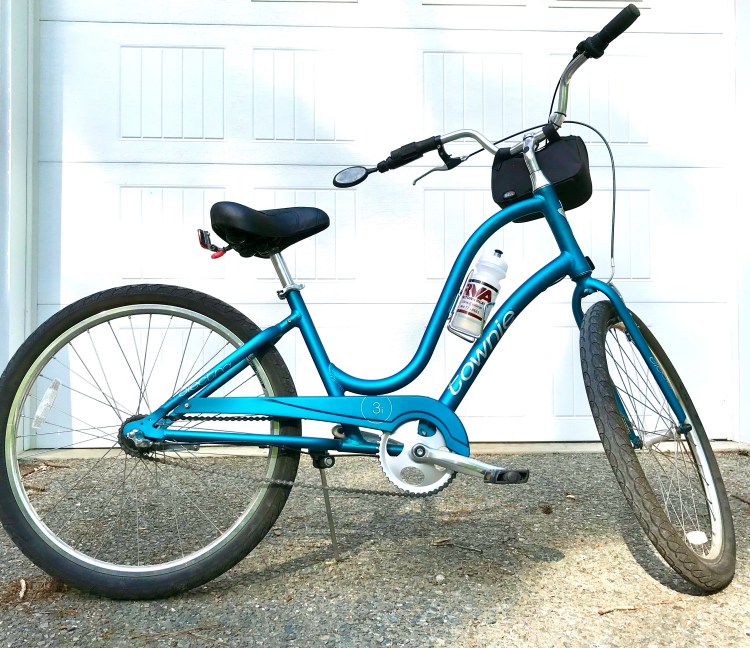
Ocean is what I like to be called. I am an aqua colored an Electra Townie, and I have lived in isolation for a couple of years.
I remember when my person first got me. We would go on rides with my brother bike Steel and his person pretty frequently. We even took a trip to the High Bridge Trail in Farmville, which was an excellent adventure. But I guess the novelty wore off, and we were put into the little garage where we sat. I’d get to come out and play every now and then, but for many years, I’ve been alone, sitting in the garage. I’ve been freezing cold over the winter and oppressively hot in the summer. But for some reason, my person decided to rescue me from isolation, and we’ve been riding a lot lately.
When she first rescued me from the garage, she took some time to give me a checkup. She cleaned me off, checked my lights, and checked my tire pressure. Getting air put in my tires kind of tickles! But it feels good to have them properly inflated. I noticed that she has a new bike helmet, too!
We’ve been all over town! We’ve explored Old Glen Allen and the Town of Ashland. We’ve seen horses and cows and lots of wildflowers. We’ve had some close calls with cars. We’ve climbed lots of hills. So many hills… and we’ve navigated through some beautiful trails. I like riding the trails. They are kind of bumpy, but fun! We’ve also seen lots of other cyclists on the road.
With my person, exploring some trails!
Sure, I’m not as fast as some of the fancy road bikes who have passed us, but my person likes that I can take her on trails pretty easily because of my fat tires! I heard her talking about some kind of quarantine and that getting outside really helps her feel better. Well, it makes me feel better, too. I’m glad we could help each other.
I really hope she has fallen in love with me all over again. I have missed being on the open road, feeling the wind against my frame, and exploring new places. Maybe she’ll even get a bike rack so we can go on road trips and see even more exciting places! I’m going to do my best to convince her. I’m just so happy to be out of the garage!
Have any of my bike friends been rescued, too? I hope to see you on the road soon! Happy riding!
Thanks for reading! As always, I hope you all are safe and healthy.
A few weeks ago, I answered a random survey from Village Harvest to possibly engage in a consumer panel. I was excited to learn that I was selected, and I received some of their products last week!
Brown rice varieties from Village Harvest
We all know how healthy whole grains are. It’s a staple of a healthy vegan diet! Farro, brown rice, quinoa, oatmeal, etc. are all important sources of complex carbs, fiber, and minerals, and they even add some protein. Plus, they are tasty and filling.
All of the varieties of products from Village Harvest shipped to me feature brown rice as the main grain. Brown rice is high in fiber, is low on the glycemic index, supplies vital micronutrients, and contains some plant based protein. I am guilty of avoiding brown rice because it takes FOREVER to cook, and I don’t often have 45 minutes to prepare it for dinner.
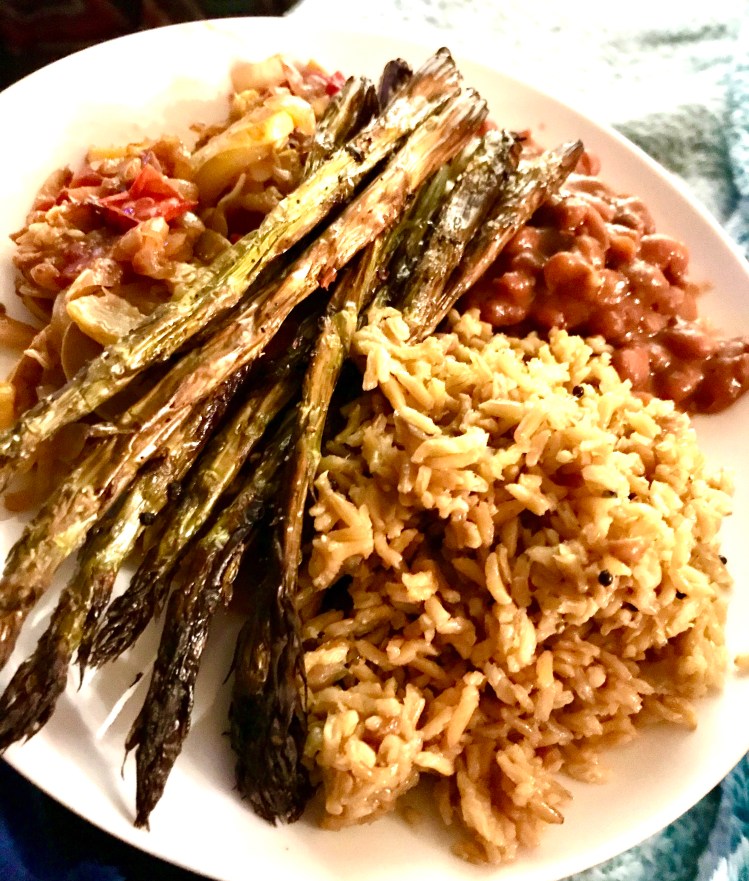
Lemon Rice with roasted asparagus, squash, and chili beans
These rice and grain pouches are super convenient, organic, and delicious! It only takes 90 seconds to heat in the microwave, but you can also prepare them in a skillet if desired. I’ve tried the Thai green curry (spicy) and lemon rice as a side dish. Both were really good with a nutty texture and complex flavors.
Used what I had on hand to create a main dish.
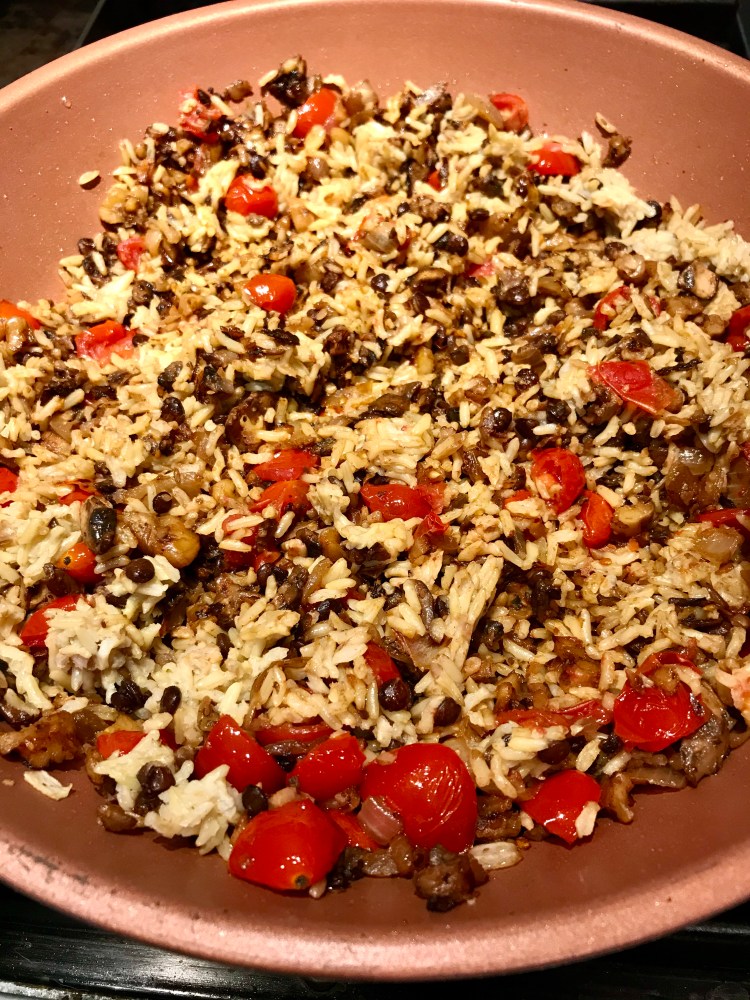
Then I saw a random photo online that made me want to use one of the other varieties in a different way. Thinking about what I already had on hand, I sautéed some chopped baby bella mushrooms, diced onions, and chopped walnuts in a bit of olive oil. A Zyliss chopper makes quick work of the mushrooms and walnuts!
Onions, walnuts, baby bella mushrooms in olive oil.
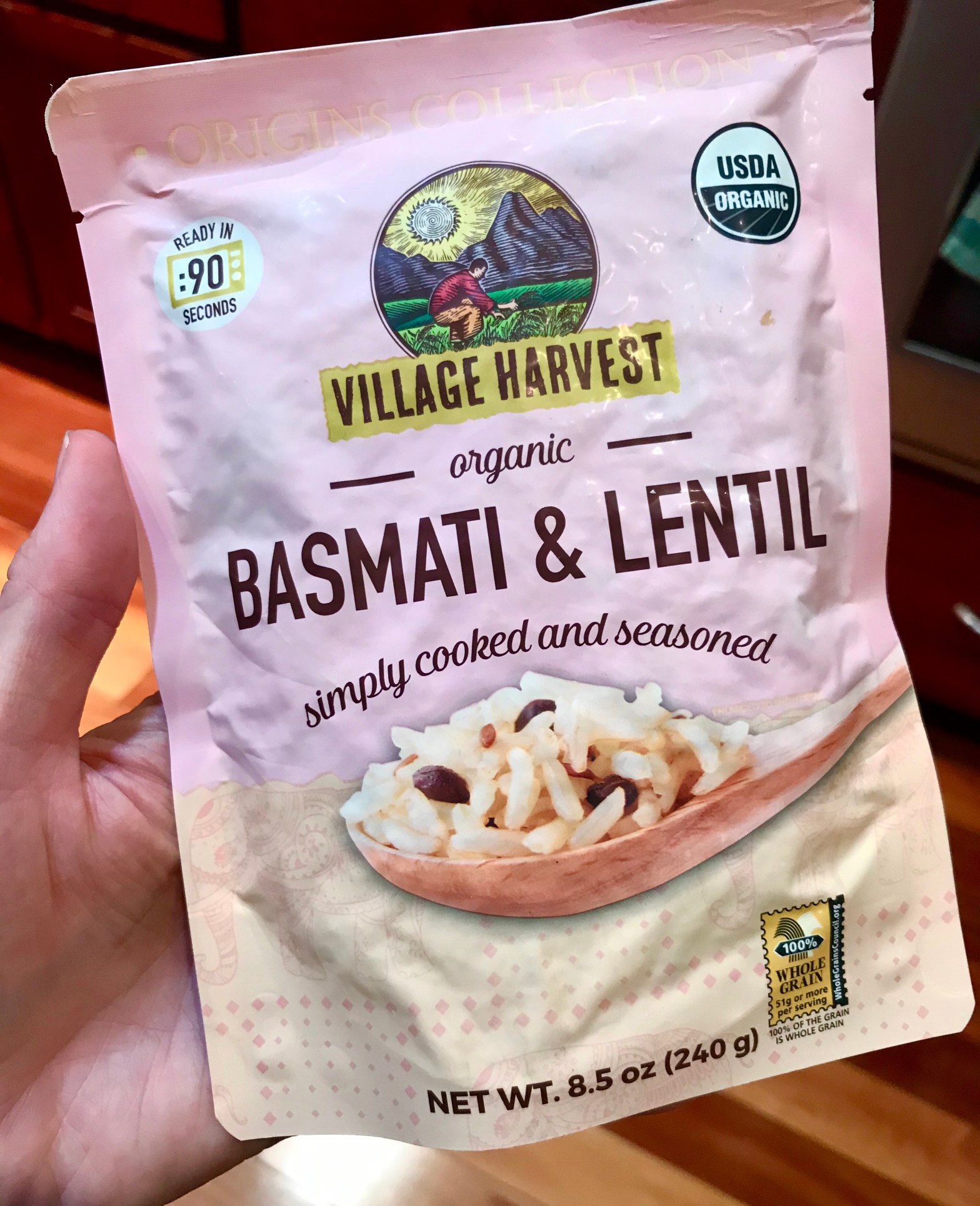
I added a pouch of the Basmati rice and lentils, a can of white beans, some chopped cherry tomatoes, and some spinach. I added a healthy dash of balsamic vinegar, a bit of Dijon mustard, and salt/pepper to taste. The grains went from a side dish to a part of the main show! You’ve got the meatiness of the mushrooms, the crunch of the walnuts, and the chewiness of the brown rice. You have the brightness from the acidity of the tomatoes and a touch of sweet from the cooked onions. It was delicious!
Added the rice and some tomatoes to the mix!Finished meal!
The next day, I added some of the cold leftovers to mixed greens and chopped veggies with some homemade ranch dressing for a delicious salad.
Nutrition information
If you are interested in adding more brown rice to your diet but are intimidated by the long cook time, give these products a try! If you are local to the Richmond area, these are available at Publix, but the Village Harvest website features a store locator so you can find their products near you.
How do you incorporate whole grains into your diet? I’d love to hear about it! As always, I hope you all are safe and healthy.
Let’s talk about a runner’s most essential body part to keep happy: your feet. With each foot strike producing 3-5 times your body weight in force through your foot, it’s easy to have issues with sore feet after a long run, especially those double digit mile ones!
On a recent training run, I had a conversation with another runner who was struggling with foot pain. I asked her when her feet hurt: first few steps in the morning, during a run, or throughout the day? Where does it hurt?
We were able to figure out a few things. First, her feet didn’t hurt first thing in the morning. This is good news, because I knew that we were not likely dealing with plantar fasciitis. Her feet only hurt after running a few miles, and pain wasn’t really localized to one point or one foot, just general foot pain on the bottoms of her feet. Now we were getting somewhere.
Next question: How old are your shoes? Bingo. She’s been running in the same shoes since her last fall training cycle. With a new pair on the way, there were some things I could share with her to help with this general fatigue her feet were screaming about.
When you run on “dead” shoes, that is, shoes that have well over 300-400 miles on them, you’ve worn out all the supportive foam helping to mitigate some of that force you produce while pounding the pavement. That can make your fascia and intrinsic muscles in your feet very unhappy. Of course, as the miles pile on in marathon training, general foot fatigue will be an issue even if your shoes are fresh!
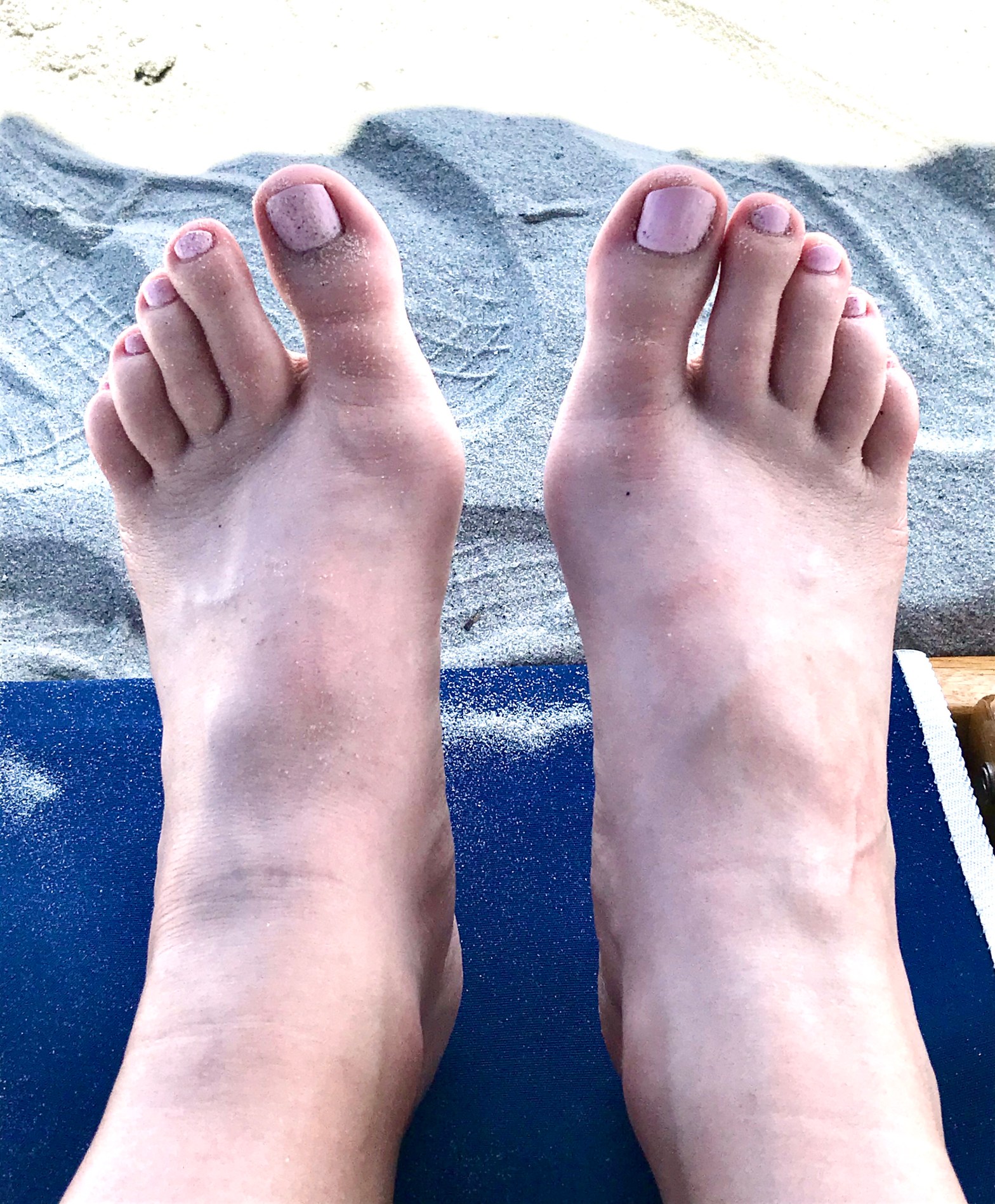
Aren’t feet always happier at the beach?
So, what are some things we can do to keep our feet happy?
Retire old shoes. Make sure you are not running in shoes with high mileage. I used to not really track the miles on my shoes, but go by feel. When my feet start complaining, I know it’s time for a new pair. Fortunately, I upgraded to a new to me Garmin a while ago, and with the app, it’s been super easy to track the mileage on my shoes. I’m already over 100 miles on a pair I bought last month!
Mix it up! If you can afford multiple pairs of running shoes, it’s nice to be able to rotate types of shoes for different purposes. You may choose a more cushioned pair for your long runs and a lighter pair for speed work, for example. Your feet may appreciate the change in support. I generally can’t afford multiple pairs of road shoes at one time, but I do have dedicated trail shoes.
Use a ball to massage your feet. A tennis ball works well. If this isn’t enough pressure for you, try a lacrosse ball. Essentially, you stand with one foot on the ball, rolling back and forth with as much pressure as you can tolerate, spending extra time where needed. This is a good video about the technique, but the plantar fascia is not a muscle as she says!
Stretch. I recommend calf stretches to make sure your Achilles is not tight. My favorite to hit the bottoms of your feet, too, is the curb stretch. If your Achilles tendon is tight, your body has to find the mobility somewhere, and sometimes it’s your plantar fascia, the supportive web of connective tissue under your feet.
Try a massage gun. If you’re lucky to have one, try using it on the bottoms of your feet. It feels amazing! I like to think I’m breaking up any adhesions that might be forming. We have a Hypervolt, but there are many brands on the market.
Tape it! Sometimes, when I’m waiting for new shoes, I will tape the bottoms of my feet using either KT tape or athletic tape, depending on how much support I feel like I need. Not a solution; just a way to buy some time. This link offers two different techniques that work. I tend to use a variation of the first technique shown with half a tape strip cut into 3 sections with an anchor at the bottom.
Wear supportive “recovery” shoes after your runs. In my running crew, we love Oofos. They are super comfortable and squishy! Sometimes they offer really great sales on their website. Other friends swear by Crocs. Hoka also makes a line of recovery sandals.
Bottom line is that there are some very simple ways to keep your feet happy! Especially as running miles increase while training for fall marathons, even if we will be running them “virtually” this year, it’s important to take some time each week to care for your feet. It’s so much easier to prevent problems than it is to fix them!
Do you use some of these tricks to keep your feet happy? I’d love to hear about it! I’m providing this information to you as a courtesy and assume no responsibility for injury sustained by taking my advice. As always, I hope you all are safe and healthy!
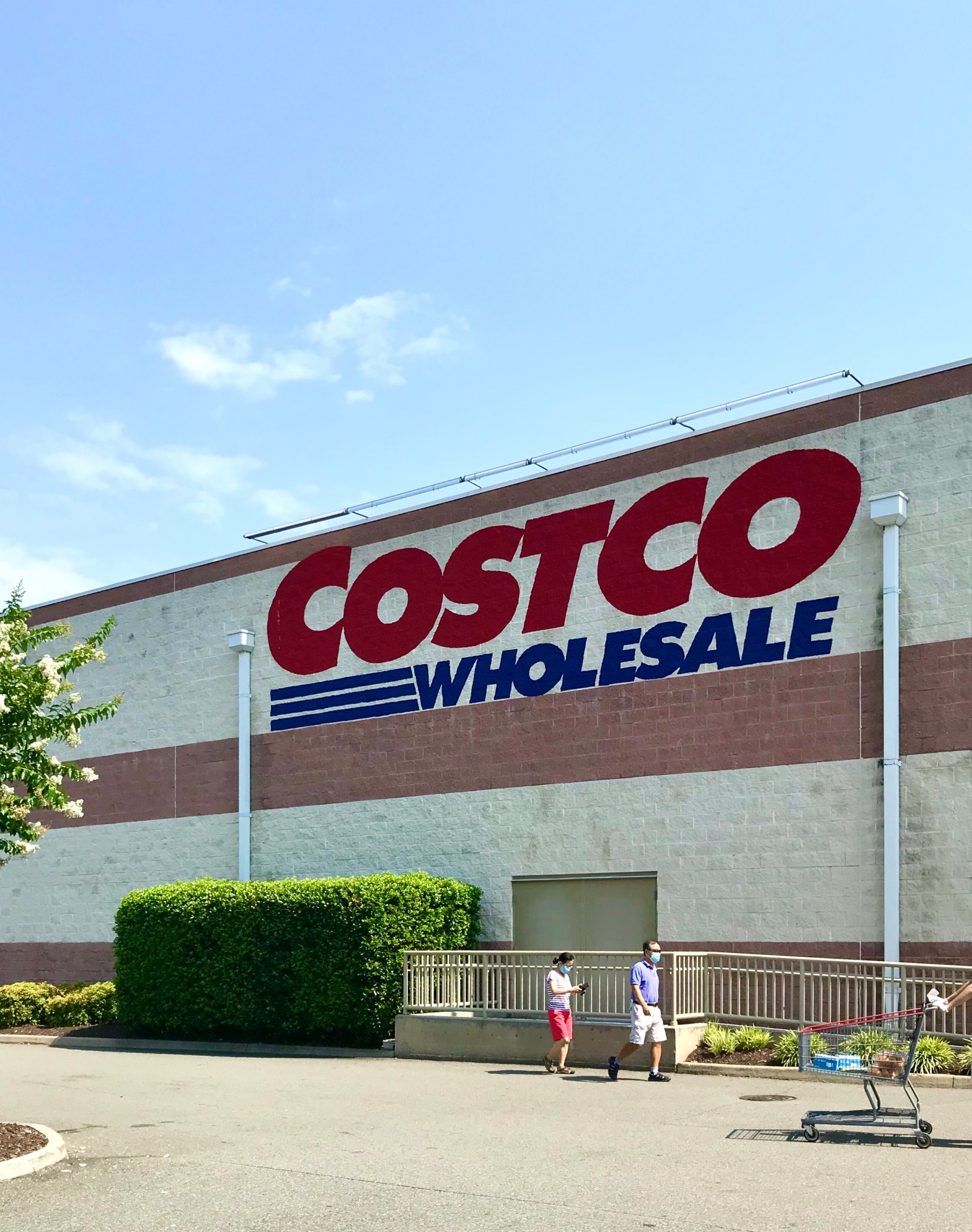
The mecca of suburban consumerism lies within the walls of Costco. But who minds, really? They treat their employees well, the stores are clean, and in non-pandemic times, you can score free food. During these strange times, they were also one of the first stores to require face coverings to protect the health of both their employees and customers.
Costco is a great source for all kinds of items, from electronics to housewares to apparel and good food. When it comes to buying staples for my pantry, no one can beat Costco for the quality and price of these items. They carry lots of national brands and their signature Kirkland store brand. Plus, there’s always something new to try.
What are my must-haves here?
Baking items
Organic sugar. You can’t beat the price. It’s less than $8 for a 10lb bag here vs. $2.69 for 24oz. for Kroger’s store brand.
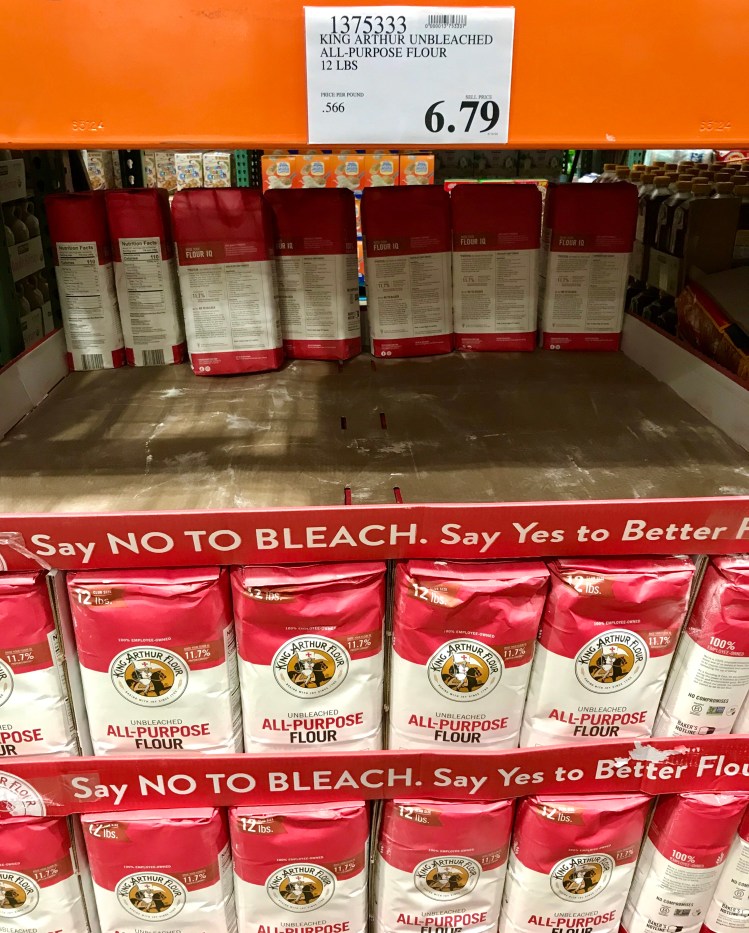
King Arthur flour. Yes, at 12lbs, it’s a big bag, but I’ve already been through one of these during quarantine! And it’s a great price!
$6.79 for 12 lbs. as opposed to $3.99 for 5lbs.
Oils
Kirkland brand organic olive oil
Chosen Foods brand avocado oil (a great neutral oil that is my favorite sub for canola or vegetable oil)
Between stovetop cooking and making homemade dressings, we go through lots of olive oil at my house! The Kirkland brand is consistently great!
Himalayan pink salt, which is my favorite type of salt. $6.69 for 5lbs. as opposed to over $3 for your typical spice jar of this salt.
Maple syrup. The Kirkland brand is outstanding!
Canned tomatoes. I love the Kirkland brand organic tomato sauce, diced tomatoes, and tomato paste.
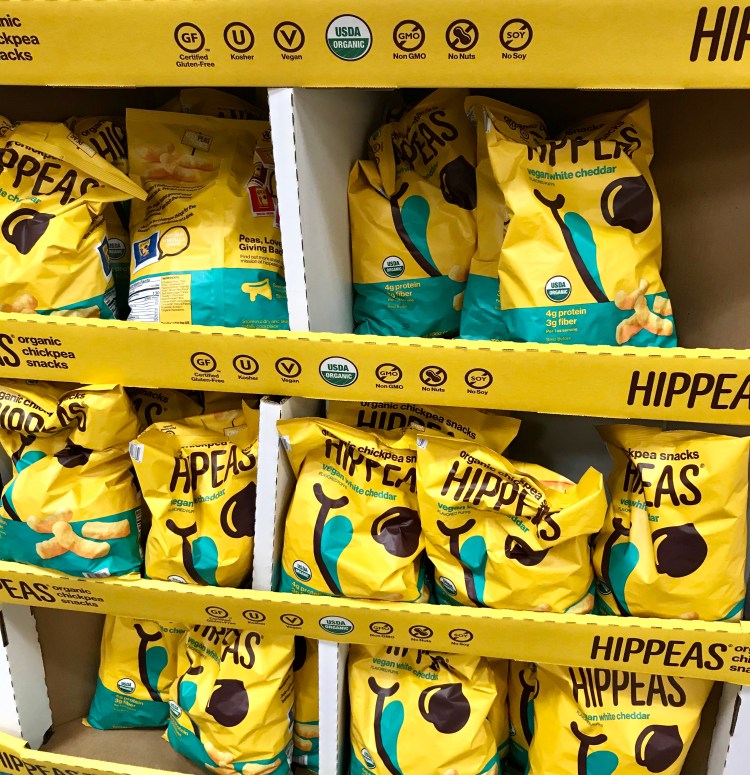
Vegan snacks. This trip, they had my favorite Kettle brand wavy chips, Hippeas, and a variety of tortilla chips, including Late July and Garden of Eatin brands. I bought the potato chips…
Vegan junk food at its finest! This is my favorite flavor of Hippeas, too!
Rolled oats. In addition to making hot oatmeal, these are great for making overnight oatmeal, oat flour, energy balls, or homemade granola!
What I expected to find this trip, but didn’t:
Beyond Burgers. I’ve seen these mentioned, but my store did not have any this visit!
Yeast. As this essential bread making ingredient disappeared from grocery store shelves, this was the one remaining places that had it in stock. Sure, it’s a huge package, but for the price, it was a solid investment for quarantine baking. It seems the shortage has now hit Costco as well.
Just part of the produce section at Costco.
Other recommendations:
Produce in bulk. If you love to juice, this is a great source for carrots, celery, etc.
Frozen fruit. They have a great variety for making smoothies and throwing in overnight oats.
Dave’s Killer Bread and buns. Two loaves or a 16 pack of buns. Great if bread is a big item in your house. Great price for these items!
My favorite bread and buns!
Nut butters. We’re all stocked up for now, but you can’t beat the quality for the price for the Kirkland brand almond butter and creamy peanut butter.
Kirkland almond butter is a great price as well as two packs of creamy organic peanut butter for $9.99
Vegan prepared foods. Explore the areas near the produce and in the canned foods. Lots of good things, including Sabra hummus, salsas, and Taste of India pouches.
Soy and almond milks in bulk. Great if multiple people in your family use this!
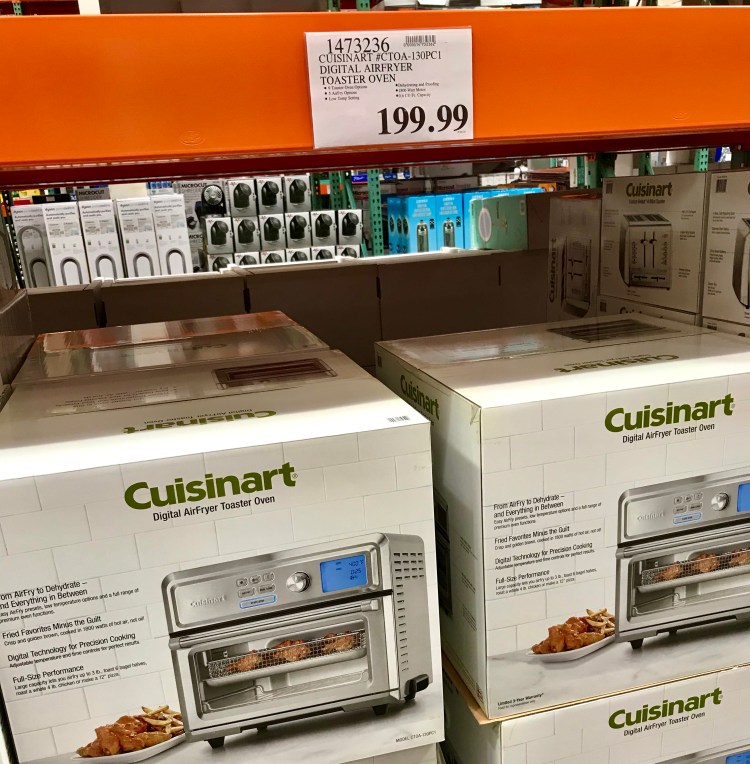
Cuisinart toaster oven/convection oven/air fryer. I have an older version than the one currently in stock at Costco, but I absolutely love it. In many of the vegan pages I visit, the topic of “the perfect air fryer” is frequently discussed. This one always receives several endorsements.
We tend to visit Costco when we are running low on any of the pantry staples. We were almost out of olive oil and flour this week! So next time you’re running low on essentials, I highly recommend checking out Costco!
Are you a member of Costco? What are your favorite items here? I’d love to hear about it! I’ll be taking a break next week to spend time with my family, but I’ll be back first week in August. As always, I hope you all are safe and healthy.
Do I have your attention? Ha! Yes, flamingos are generally known for standing on one foot. They also happen to be one of the mascots of my running team, the Pink Nation, a sub-team of the Sports Backers Marathon Training Team. One of our mottos is blood + sweat = pink.
But why should humans, especially runners, work standing on one foot into their fitness regimen? I’m about to tell you.
If you’ve ever run on trails, you know how crucial strength and balance are for staying upright while navigating variations in the pitch and camber of the trail, not to mention slippery surfaces, roots, and rocks. Runners fall most frequently on trails from what I’ve experienced. Close second in dangerous terrains that trip us up are sidewalks in older neighborhoods like we see in Richmond; I’ve succumbed to many an uneven concrete slab. In fact, I almost ate it running in the Northside of Richmond yesterday! And falls are humbling. And they sometimes result in injury!
As a physical therapist, I incorporate some version of this activity with almost all of my ambulatory patients as a fall prevention measure. For my limited ambulators, they start holding onto a surface for support, whether that’s the back of a chair, the parallel bars, or the kitchen counter. As they improve their strength and balance, they can start decreasing their level of arm support. If they are unable to do this, they start with their feet in tandem or staggered, narrowing their base of support. Here are some basic instructions for performing this exercise.
Why do I make my geriatric patients do this? You get a lot of bang for your buck. Closed-chain (meaning feet on the ground) activities typically engage more muscle groups than open-chain activities. It’s not taxing on your cardiopulmonary system. And it feels safe due to the proximity of support. Plus, you are forcing your brain to work on your balance reactions, starting at your feet and ankles, because our first line of defense in preventing a fall is using our ankle strategy. I will spare you the complete lectures on fall prevention and neuroplasticity, but if you want to geek out about it, check out this article.
But why should runners do this? As a coaching group, my fellow Pink Nation coaches and I agreed that this is a terrific addition to any runner’s routine. This was a part of our “pro tips” for our last training season.
Think about how much time we technically spend supporting our body weight on one leg while running. Just try standing on one foot on solid ground. You should feel your ankle moving to keep your center of gravity over your base of support. The longer you sustain this, the more you will also feel your glutes engage to keep your hip from dropping and your core activating to take some stress off of your ankle. This article sums up the rationale quite nicely! If you can hold this position for at least 30 seconds, you can increase the difficulty of this task.
What does my version of this look like? I stand on a Bosu ball, dome up, with my foot in the middle of the ball. I try to hold this for at least 30 seconds. Sounds simple, but it’s not. Same exercise, just on a more compliant surface. A scale down from this would be to stand on a block of foam or a pillow. Do these near some type of support, like a wall, chair, or between the dip bars at the gym, so you can reach for it if needed.
Besides the simple activity of standing on one foot, there are several dynamic exercises that incorporate single limb stance and are excellent additions to your strength training. Here are a few of my favorites:
Runner’s lunge series (my personal favorite; the PT in this video has a whole series of information on his Facebook page. He’s a genius!)
Pistol Squat (can start squatting onto a box or weightlifting bench for a half pistol squat)
All of these exercises work on single-leg strength and stability while running, increasing your efficiency and decreasing your risk for injury. Personally, if I only have a few minutes after cardio cross training to work on strengthening, I will choose one of these exercises. Try to work one or two of these activities into your next strength training day!
___________
Do you incorporate single leg exercises into your strength training? I’d love to hear about it! I am providing this information as a courtesy and assume no responsibility for injury if you take my advice.
It’s been a week, y’all. I’m just trying to muddle through like everyone else.
The heat and humidity that is summer in Virginia is really wearing down on me. It’s not fun to run all these miles in this oppressive heat. I almost cried on my 6 mile run today when my NBC12 Weather app alerted me that a heat wave begins tomorrow. What??? As if it wasn’t hot enough already! So far this week, I’ve run 10 miles Sunday, 3 miles Tuesday, and 6 miles today. All painfully slow. Today, though, at least the baby trails I run didn’t feel like a sauna, and my typical trail companions of giant horseflies were not out in abundance today. There was actually a bit of a breeze, too.
As part of my route, I ran the beginning of the Ashland to Petersburg trail. They are actively working on updates to the path, and I asked one of the construction workers what the plan was. He indicated that the path will be paved. He also said that major structural changes will begin Monday, so I’m looking forward to seeing what that will look like! So far, there are steel supports in place, and they are placing what appears to be weed blocking/soil retention barriers around these. This is good news!
View of the construction on the Ashland to Petersburg Trail. Steel supports are in place.
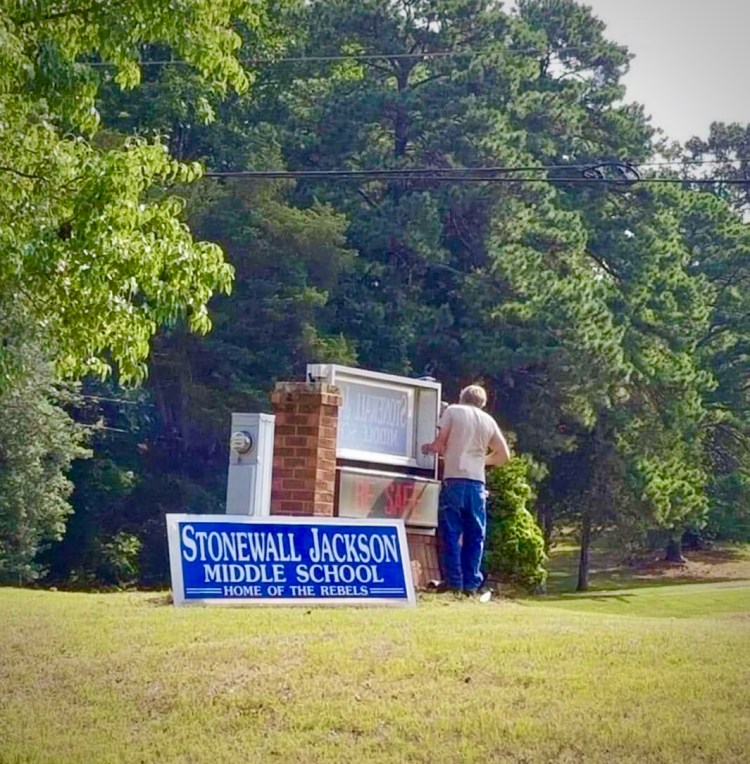
We’ve had some other good news in Hanover County, too. In an unexpected move, the appointed school board voted 4-3 to change the names of Lee-Davis High School and Stonewall Jackson Middle School. Never in my lifetime did I think this would happen. And in what seems to be very active measures to reassure the public that they are serious about the outcome of this vote, they removed any reference of the confederate names from the county website and are removing the signs on these buildings. We do not know, as of yet, what the new names will be. More symbols tumbling… we’ll revel in the victory for the moment. So much more work needs to be done.
A worker removing the sign at Stonewall Jackson Middle School in Mechanicsville in Hanover County, VA. Photo courtesy of the Hanover NAACP.
In other news, COVID-19 continues to spread exponentially as states reopen. Some are still holding on to the theory that the virus is not as bad as the media portrays it. I have friends who are epidemiologists and healthcare professionals with feet on the ground who beg to differ.
Our county has announced its plans for instruction for the new school year. We can choose 100% virtual or 100% in person, 5 days per week. There is no in between. And this decision is binding for the fall semester. There are so many unanswered questions about the plan, but so far, they have applied for a variance in social distancing guidelines, and will allow 3 feet between desks instead of the recommended 6. And rumors are floating that you cannot get pre-IB curriculum if you choose the virtual option, and this would affect my daughter. All I do know is that last year, there wasn’t even soap or paper towels in the bathrooms consistently. I am very concerned that the schools will not have sufficient supplies just to cover basic hand hygiene. At the rate that cases are increasing right now, I’m wondering if the choice will be made for us in the coming weeks before the semester starts.
Some people think this virus just a bad flu. Really? According to the Centers for Disease Control, annual death rates from influenza, all types, are between 3,000 and 61,000 per year in the US. Deaths during the 2018-2019 flu season totaled 34,200. We’ve had over 133,000 deaths from COVID-19 in 4 months. I’ve never seen the flu tear through a long term care facility and wipe out dozens of residents. This is not quite the same. And speaking of the CDC, the White House is stripping this essential government agency of its rights to collect and analyze data. This should raise red flags for everyone. So far, the US has failed epidemiology 101.
This brings us to a new job opportunity. Apparently one of the only sectors of growth right now is in contact tracing. Contact tracers interview people who contract the virus, then investigate the possible path of spread of the virus, contacting those exposed and counseling them about their next steps. This job only requires a high school diploma. Those with higher degrees can perform more supervisory roles in this process. Sound interesting?
I found a free class available from Purdue University Global that teaches you the basics about pandemic containment and contact tracing. I got a little certificate and everything! And if you just want to learn more about the pandemic itself and the science behind the decision making, the World Health Organization has a very well done series of presentations online that are part of the Purdue course.
The Virginia Department of Health is hiring contact tracers through temp agencies, so you have to reach out to one of these to represent you in the hiring process.
Cross your fingers that I will get one of these jobs! Have you thought about becoming a contact tracer? I hope these resources are helpful! As always, I hope you all are safe and healthy.
On a recent training run where I overslept and ended up running in the brutal heat and humidity that is Virginia in July at 10AM, I had flashbacks to my experience during a Ragnar trail team relay event in 2017. My teammates and I all agreed that this was a one and done event for us! For some reason that particular year, Mother Nature decided that weekend in April was the perfect time to channel her inner summer and grace us with temps in the 90’s with super high dew points as well. It was lovely.
I found myself over caffeinated. I love Nuun, but I mistakenly brought only caffeinated flavors to this event. Plus, in an effort to stay awake when I needed to run during this 36 hour event, I also imbibed in way too much coffee. It was so hot and humid, I really needed the electrolyte replacements, but when paired with the extreme weather conditions, lack of sleep, and extra coffee, I found myself unable to even run the final loop. I walked most of it because my heart was racing, and I was overheated. I hope none of you ever go through what I did!
This experience has led me to choose my supplements more carefully, but I also wanted to explore the topic further. What does the science say about caffeine, and are there any studies about the effects of caffeine while exercising in hot, humid conditions?
Caffeine is one of the most common stimulants utilized. Do you have a relationship with it? I do. I faithfully drink my cup of coffee in the morning, enjoying that habitual boost of alertness it gives me, and then I generally abstain for the remainder of the day. I’m the type of coffee drinker that can’t have any past noon, or I won’t sleep that night! In hindsight, this should have been my first clue that I should not have overdone it at Ragnar. Maybe your relationship with coffee is a bit more freewheeling than mine. You may be the type of person who can’t get through your day without chugging multiple pots of it, and yet you still sleep like a baby all night. Or maybe you fall in between these two extremes.
Who doesn’t love their morning cup of coffee?
This knowledge about yourself should help guide you when choosing which supplements you will use for longer training runs. For those runners who are preparing for fall marathons, we are starting to reach the point in training already where we will be running double digits on the weekends. This means we will need to start to figure out what endurance supplements work for us, and which ones don’t. It’s different for everyone.
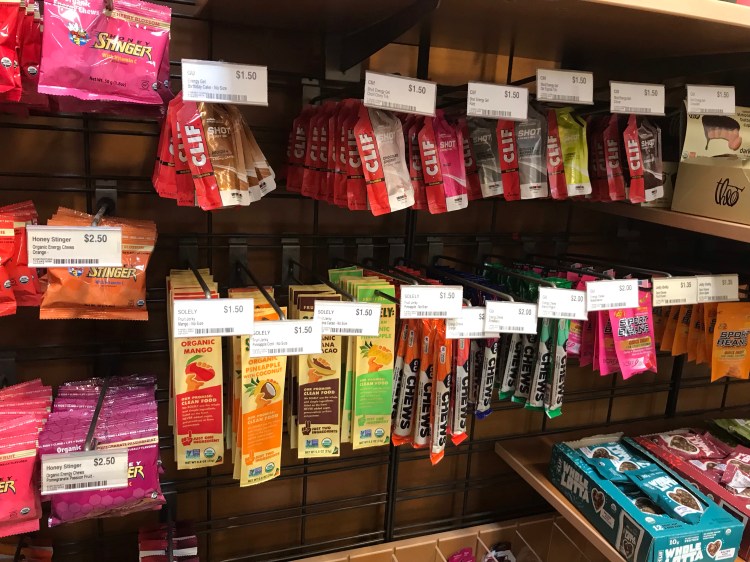
Just a few of the choices at my local REI
There are a plethora of choices at your local running stores, sporting goods stores, grocery stores, and even Amazon. Between electrolyte replacements, gels, and chews, it can become confusing and a bit overwhelming about what to try. Many of the commercially made supplements on the market also contain caffeine.
Just to give you a rough idea of caffeine content of supplements, I’ve given you some examples:
Coffee: 80-100mg
Clif Shotz with caffeine: 25-100mg, depending on flavor
Extreme Sport Beans by Jelly Belly: 50mg per packet
Gu with caffeine: 20-40mg, depending on flavor
Nuun Sport with caffeine: 40mg
Skratch Labs energy chews, sour cherry flavor: 50mg
It’s easy for the caffeine levels to accumulate if you choose only supplements with caffeine, as you can see.
Caffeine has been well studied as a safe energy boost during exercise and has been shown to reduce your perceived effort, but its use has been controversial. It was actually a banned substance in the Olympics from 1984-2004, and is currently on the watch list as a potential to be banned again by the World Anti-Doping Association.
So, we know that caffeine has benefits, but what are the down sides? My personal experience aside, here’s what the experts say about some of the negative effects from caffeine:
Increased heart rate and blood pressure. This is a potentially compounding issue when paired with exercising in the heat and humidity, as this is also a side effect of training in the heat. Of course your heart rate increases with activity, but add the effects of caffeine and the stress of the heat, and your performance may suffer. Additionally, caffeine may delay recovery from elevated HR and BP with activity.
Gastrointestinal distress. Most regular coffee drinkers are well aware of the fact that caffeine can have a laxative effect. Caffeine is also acidic and can irritate the lining of the GI tract, causing an upset stomach. Both of these phenomenons can make for a bad run!
Diuretic effect. Increased urination can contribute to dehydration, but most of the studies I read did not support the theory that this risk was substantial.
Anxiety/feeling jittery.
Sleep disturbances.
Personally, I limit my caffeine consumption to my morning cup of coffee typically before a run. Once we start getting to 15 miles or more, I will keep one type of gel or chew that has caffeine, just in case I really need that extra kick. But, remember, my body is sensitive to its effects.
I’ve included some links to studies and articles on both the effects and safety of caffeine with exercise and safety with exercising in the heat below. The best study I found linking these topics had some concerns for me, including the small sample size of 16 cyclists, the fact that the participants were all male, and that the study was funded by a grant from Coca-Cola. Always follow the money, folks. The authors concluded that there was no danger to consuming caffeinated sports drinks during exercise in hot and humid conditions; the study also kept caffeine consumption well within recommended consumption limits.
As with most things in life, as you may have assumed, moderation is key. Caffeine can definitely be a friend, but there is such a thing as too much. So when you are choosing supplements for your runs, don’t exclusively choose the caffeinated ones. Have a plan to use these wisely, and practice before race day. According to the FDA, the recommended maximum dose per day is 400mg. It’s advisable to keep your daily consumption within these guidelines, including that morning cup of coffee! Plus, you will feel a significant boost with the non-caffeinated versions simply with the sugar rush. I hope I’ve helped you make some balanced choices as you shop for supplements for your fall races, even if we end up running virtually this year.
What’s your experience with caffeinated supplements? While commercial supplements and electrolyte replacements are an important part of our tool bag for successful distance running, don’t underestimate the value of using real food during a run. I’ve personally benefitted from chewy candy and plain potato chips or pretzels during many a training run and race, and it’s a topic that ultra-runners love to discuss. But that’s a blog post for another day! Opinions are my own. As always, I hope you all are safe and healthy.
“Heat stress can reduce cardiac filling through pooling of blood in the skin and through reduced blood volume. Compensatory responses include reductions in splanchnic and renal blood flow; increased cardiac contractility, which helps to defend stroke volume in the face of impaired cardiac filling; and increased heart rate to compensate for decreased stroke volume.”
The splanchnic circulation consists of the blood supply to the gastrointestinal tract, liver, spleen, and pancreas. – Wikipedia
“…caffeine ingestion prior to moderate aerobic exercise delays recovery of the parasympathetic component of autonomic heart rate control, as well as the recovery of BP at baseline levels in young male participants.”
I was trying to come up with a clever title about cake for this post. The one I chose stuck with me. Because what I actually wanted to write about was the amazing cake I made last weekend. The interesting part of this wasn’t actually the cake, though. It’s the reason why I made it in the first place.
We are fully entrenched in quarantine fatigue in the US. I’ve got to say… it’s been a struggle for me at times. I’m still essentially unemployed, although I did actually work a few hours to onboard to a new job. However, real treatment hours are not yet available. And I feel like as a country, under poor and divisive leadership, we are losing the battle with the virus, and losing the fight against racism. Overall, it’s not a happy state of affairs at all. I feel helpless at times.
When I was a young adult, I truly thought that with the right education, I could literally change the world. I look back on my idealistic self not with regret, however, as that drive kept me going all through undergrad and graduate school and to launch my career as a physical therapist. The longer I practice, the more I realize that what needs to be fixed about this world, especially in healthcare, I can’t necessarily do as a PT. I still appreciate and love helping change the world one patient at a time, but that is no longer enough to fuel my soul. There are so many systemic issues that keep the world from being equitable for all. One of the best things I can do for my patients is to help be that impetus for change. But where do I start?
Do you ever feel like you need to turn off the media? I do. But at the same time, I need to digest essential bits of information so I’m not totally clueless about what is happening in the world: the good, the bad, and even the ugly. That’s the conundrum.
We’ve had some good things happen in Richmond. The mayor took advantage of the new law passed by the state legislature that went into effect on July 1st which allows local governments to dismantle Confederate monuments as they see fit. And so far, Stonewall Jackson, Matthew Fontaine Maury, the soldier at Libby Hill, and JEB Stuart are gone. I know these are just symbols, and there is so much more work to be done, but the removal of these monuments makes the statement that the Richmond community no longer places memorials of the Confederacy on a pedestal. We’ll have to wait on Lee; it is a state owned statue, falls under different rules, and its removal is being held up in court.
Meanwhile, in my county of Hanover just outside of Richmond, the school board and board of supervisors are holding on to the relics of our past. They are refusing to change the names and mascots of two schools: Stonewall Jackson Middle and Lee Davis High, seemingly to not “offend” those who still hold onto the principles of the Confederacy. Even as other cities, counties, and educational institutions in Virginia are changing names, and with the Virginia PTA and the governor also issuing statements urging changes, Hanover leadership continues to want to live in the past. Sigh. So much work yet to be done.
Social media continues to be an outlet to reveal extremely disturbing outbursts of overt racism and bad behavior. You don’t even have to scroll your media of choice yourself. Each viral video hits the news. From evidence of police brutality to self-proclaimed white supremacist militias to attempted lynchings to people going into a rage because they were asked to wear a mask… it’s all captured on camera. You think that most people are reasonable, kind, respectful… but then you see stuff like this. It’s disgusting. The kind of hate you see cannot be reasoned with. This is how the world sees us. And it’s overwhelming.
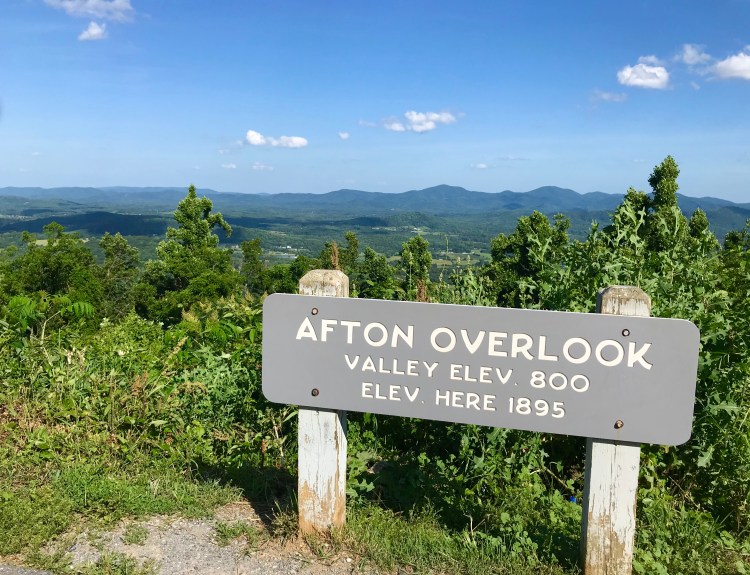
Taken on a drive down the Blue Ridge Parkway with my daughter a couple of weeks ago. Day trips to the mountains help me connect with nature. I love living in Richmond. It’s a quick trip an hour east or west to get to the mountains or the ocean.
When I’m overwhelmed, I try my best to carry on with my routine. I still keep up with my training runs. I still do my chores. I go to places that bring me peace, like the mountains. And I bake. Not only is baking a distraction and stress relief for me, but it’s my love language. In the beginning of the pandemic, it was banana bread and artisan loaf bread. Last week, I saw a chocolate peanut butter cake as I scrolled through Instagram. A new baking adventure called.
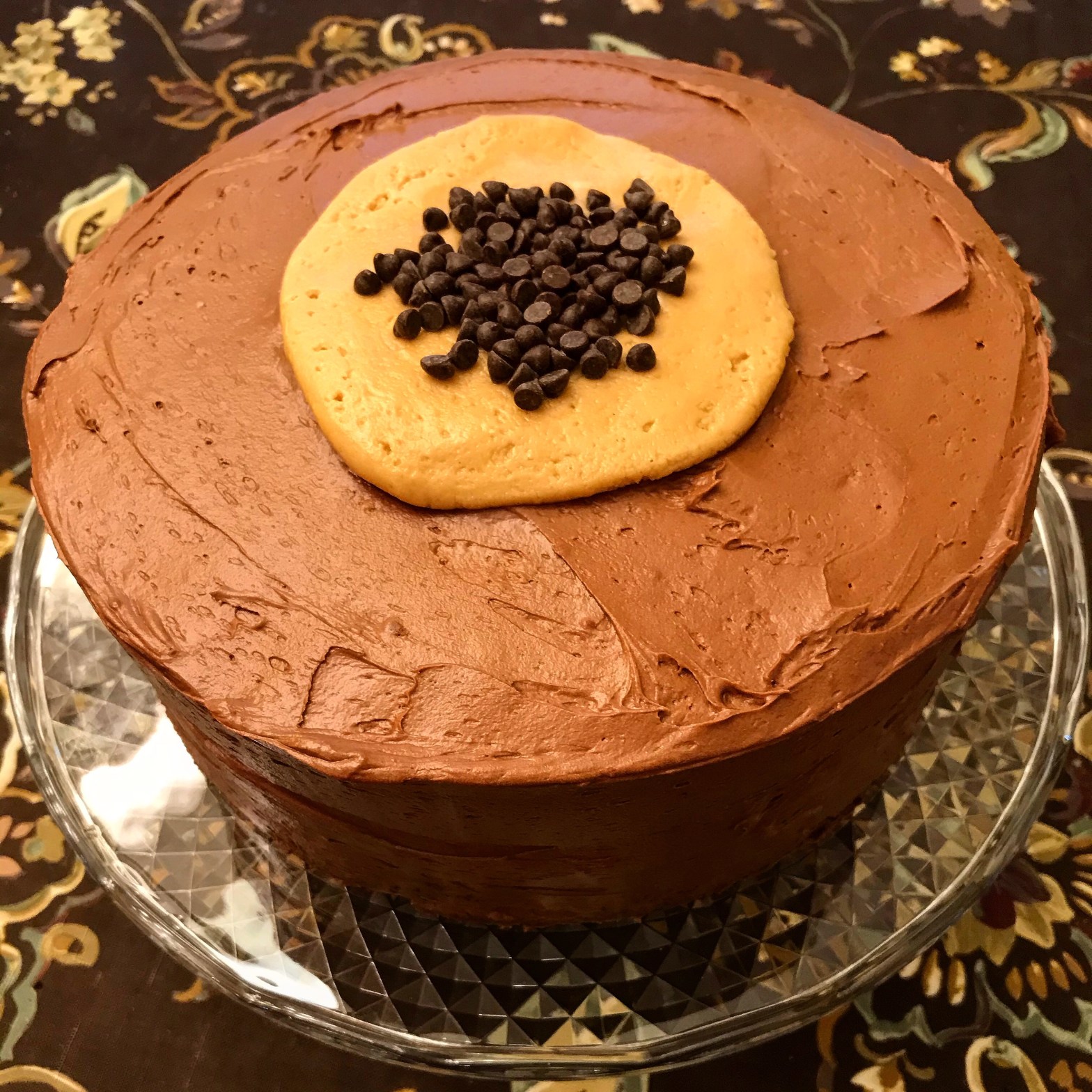
Chocolate peanut butter cake!
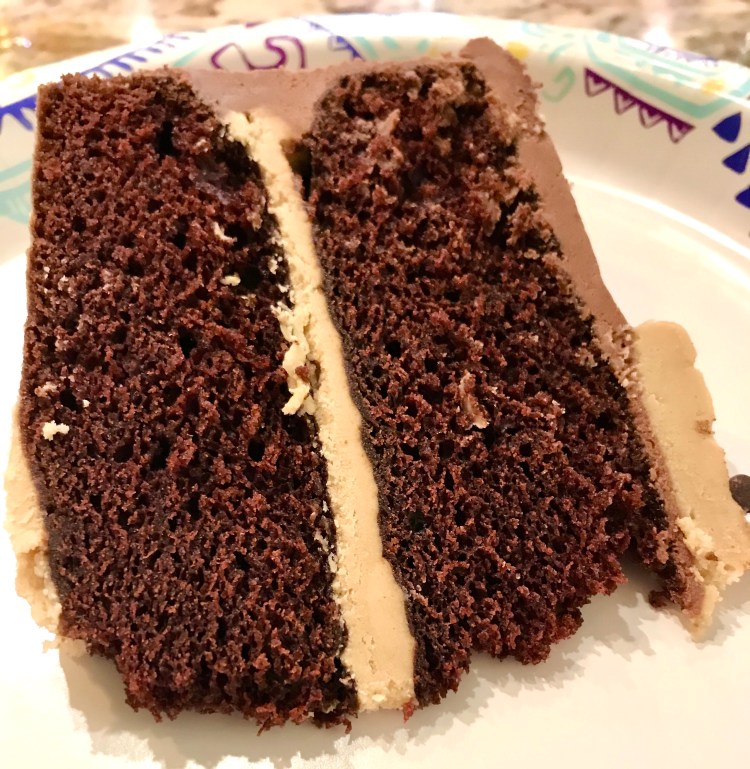
As my reward for running 11 miles Saturday, I finally made the cake. I used my favorite chocolate cake recipe from King Arthur flour (which I always make with coffee as the liquid) and the chocolate frosting and peanut butter frosting recipes from Loving It Vegan. I have a new favorite cake. And, seriously, you’d never know it was vegan. You’ll need to double the cake recipe if you want to recreate this.
Peanut butter frosting wedged between two layers of chocolate cake, topped with chocolate frosting, and garnished with the remaining peanut butter frosting and Enjoy Life mini chocolate chips. It was as good as I’d hoped it would be!
Obviously, baking a cake is not a cure for COVID-19 or the solution to racial injustice, but each slice is a bit of comfort in an uncomfortable world. Bake, paint, write the world a better place, whatever brings you joy, even if the place is just your little bubble. Sometimes we have to retreat into our own spaces in order to recharge so that we are better equipped to help others. I’m giving myself permission to comfort me.
How are you coping with our ever changing world? Don’t feel guilty by taking time to do the things that help take care of YOU. As always, I hope you all are safe and healthy.
Ok, alright. I know they aren’t pets. But issues with an IT band can be a huge pain in the knee. And pain here can really squelch a training program. As fall marathon training season ramps up in mileage, it’s not uncommon to hear from this anatomical structure about now. So let’s learn a little about how to take care of it!
First, I’ll give you a bit of an anatomy lesson. Your IT, or iliotibial band, is a multi-layer bundle of connective tissue that originates from your hip, incorporating fibers which begin mainly from the tensor fascia lata muscle, but your glutes contribute as well. It also is fused to bone in certain points, so describing its function is as complex as its multiple connections. It inserts on the lateral side of your knee. It is thought to act like a spring when running, building up and releasing tension to help propel us more efficiently. When this fibrous structure is inflamed, it lets you know with pain at the insertion point.
What causes IT band syndrome, you ask? Well, those new to distance running may increase the length of their runs too quickly. Runners may have muscle imbalances and decreased flexibility in addition to relative over training, including weight lifting.
As runners, we tend to brush off minor pain, convincing ourselves that it will simply go away. However, pain at a specific place is your body’s way of warning you that something is off, so it’s important to listen to these signs.
When I had issues with this myself, I was marathon training in addition to regular and intense cross fit training. The pain began as an intermittent niggle that would start a few miles into a run, feeling like a tightening pain on the outside of my knee, worsening every time I stopped running. It would loosen up again once I started running, and that cycle would continue until the end of my run. It was also tender to the touch on the outside of my knee. The pain eventually reached a point that it was difficult to navigate down stairs, and at times, it felt like my knee would buckle. The only cure at this point was to not run. Folks, you do not want to ignore the pain and let it get this bad!
So what do we do if we have IT band pain? The same things you should be doing on a routine basis to prevent problems!
First course of action if you are experiencing pain is to rest at the first signs of issues. Take a few days off from running. It won’t kill you, I promise. Give your body a chance to deal with the inflammation and simmer down.
Gentle foam rolling.
Avoid long sessions over the IT band itself. Instead, focus on the TFL at the top of the band, quads on the front of your thighs, and the glutes and hamstrings on the back. Don’t go crazy. Just a few minutes a day should help release any tight muscle fibers creating imbalances.
Alternatively, you can use a stick style roller or a massage gun, but foam rolling is still a favorite for me.
Stretch. Do this after your foam rolling. I have a few favorites which target the muscles that contribute to the IT band, but you also want to incorporate stretches for quads and hamstrings in your routine. I’ve listed the 3 that I do frequently, but I’m also linking this great article about a variety of stretches that help the IT band!
Tailor sit stretch. This one is easy to do while you are sitting at work!
Cow Face pose (leg portion only)(don’t forget to switch sides!)
Incorporate strength training. If you work on strengthening your hip abductors, extensors, and rotators, you can take some stress off of this structure.
If your pain does not settle down with a few days of rest, stretching, and gentle foam rolling, see a sports medicine doctor. In my experience, you will be happier if you see one who is also a runner. They may recommend physical therapy. If you are a Sports Backers MTT participant, you have fast track appointments with VCU Health, just another benefit of the program. Reach out to your coaches if you need this!
Keep incorporating the above foam rolling, stretching, and strength training into your cross training and recovery routines for prevention.
Avoid running on the slant of the road. Especially in older neighborhoods like we find in Richmond, some roads tend to be significantly cambered. So when your coaches tell you to try to run toward the crown of the road, listen! Running on the camber is essentially creating a functional leg length discrepancy. This can create all kinds of imbalances.
Make sure you are in the right shoes for your running gait. Your local running store is your best bet for getting fitted for the right shoes. It’s really important that they do a running gait analysis, because your walking gait is not the same.
If you are close to race day and the pain is tolerable, you can consider KT taping, but this should not be your first course of action, nor is it ideally something to try for the first time on race day.
This is me in the cow face yoga pose, legs only. I credit my friend Amanda Myers, yoga instructor, massage therapist, and health coach, for teaching me this important stretch in my bag of tricks to keep my IT bands happy! Hold this for 90 seconds, then switch sides!
Bottom line is that if you want to be able to run consistently over multiple training seasons, you must put in some work to take care of your body. The above strategies will not only help keep your IT bands happy, they will also help prevent other overuse injuries. It all works together.
Stay tuned for more cross training tips as our MTT season progresses! While our racing season for 2020 may very well be virtual, the training is still real, which means the risk for injury is as well. It’s far easier to prevent injury than it is to recover from it. I give you this information as a courtesy and assume no risk for injury sustained by taking my advice. It is important to see your doctor if injured. As always, I hope you all are safe and healthy.
As we head into Independence Day weekend, we are also likely going to small, socially distanced get-togethers, and bringing food. In Virginia, we have officially moved into phase 3 of reopening with regard to the pandemic. If you are wisely choosing to stay at home this weekend, you can at least pretend you’re at a party!
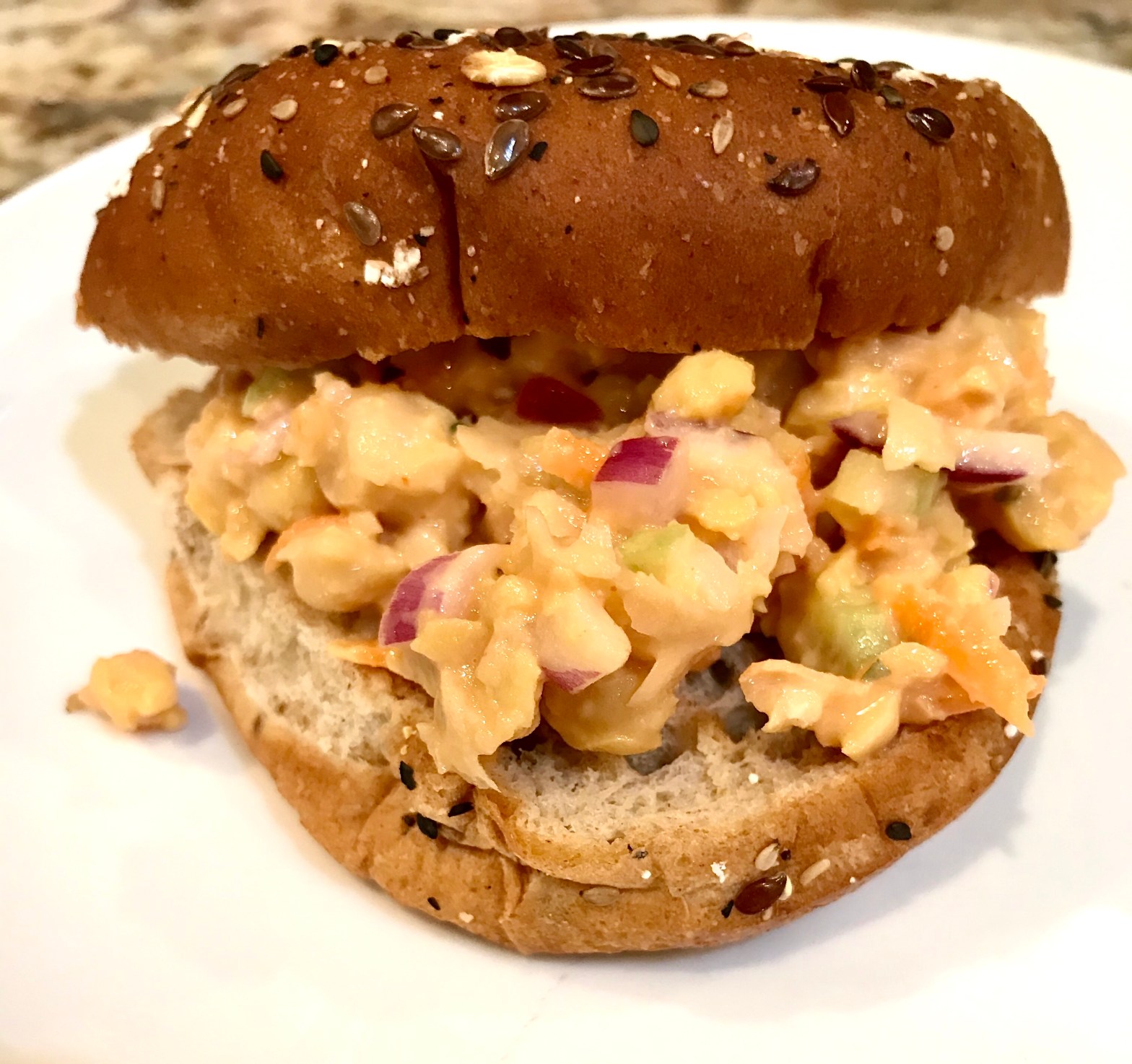
I covered guacamole last week. But sometimes I get bored with hummus vs. guacamole as my party contribution. Buffalo chickpea salad has been another go-to of mine to bring to parties over the past couple of years. You can spread it on pre-made, vegan party buns (Sara Lee artisan party buns are my favorite!) and top with sliced tomatoes and vegan ranch! (double the recipe if you do this!) You can customize your add-in veggies for added crunch and nutrients or keep it simple. It’s up to you!
People who try this can’t believe that it’s chickpeas. It’s simple and quick to throw together, and is best when it’s had some time for the flavors to settle a couple of hours. I typically make this a couple of times a month to have on hand for lunches.
The key to this recipe is finding a good, vegan buffalo wing sauce. My favorite brand is by Noble Made, but it’s not always easy to find, and it’s expensive compared to other brands. However, it does have cleaner ingredients that most. I’ve found the medium and mild versions at Kroger and Publix. My second choice is either Frank’s Red Hot or Texas Pete wing sauce, both of which are commonly available and very affordable. They are also accidentally vegan. Many wing sauces have mayo, so read the labels.
The other feature needed is the vegan ranch! I have a hard time finding any commercially made that I love, so I’ve given up and started making my own. I included the recipe after the salad recipe.
Now that you know that, here’s the recipe!
Ingredients for Buffalo Chickpea Salad
Buffalo Chickpea Salad:
Ingredients
One can chickpeas (garbanzo beans), drained and rinsed
1/4 cup diced onion (red, Vidalia, or green onion all work well)
¼ cup diced celery (about 1 stalk) (optional)
¼ cup diced or shredded carrot (optional)
¼ cup wing sauce
2 T vegan ranch
Directions:
In a medium sized mixing bowl, mash the chickpeas. You can do this with a fork, but if you’ve got one, a pastry blender works really well for this task.
Add in your chopped veggies.
Add in remaining ingredients and mix together. If the mixture seems dry, add a bit more buffalo sauce. It’s never an exact science with salads!
Using a pastry blender to mash the chickpeas.Finished salad
Vegan Ranch Dressing:
Ingredients
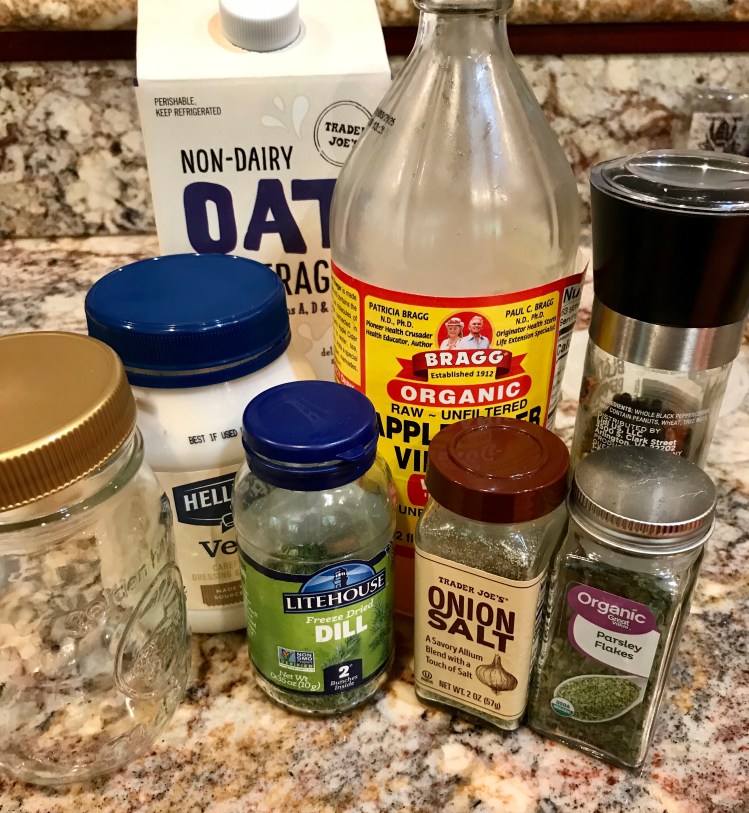
1 cup vegan mayo
2 T apple cider vinegar
1 T dried dill
1 T dried parsley
1 tsp. onion salt or garlic salt or powder (I use Trader Joe’s onion salt)
Salt and pepper to taste
Your favorite plain, plant based milk (I start with a healthy splash and add more if needed to create desired consistency)
Directions
Mix all ingredients together; I typically do this in a lidded jar and shake! Check dressing for consistency, adding more plant milk as desired.
Ingredients for Vegan Ranch DressingEverything goes in the jar, then shake!All done!
Recently for my buffalo chickpea sandwiches, I’ve added a spread of Kite Hill vegan ricotta cheese and some extra vegan ranch on my bread with this salad. It’s a great addition to the flavors! If you want to up the heat, add a few dashes of your favorite hot sauce to the mix. Enjoy!
I hope this gives you some ideas for vegan cookout food as we progress through the summer months. If you try this salad, let me know! As always, I hope you all are safe and healthy.





















 Anne the Vegan